
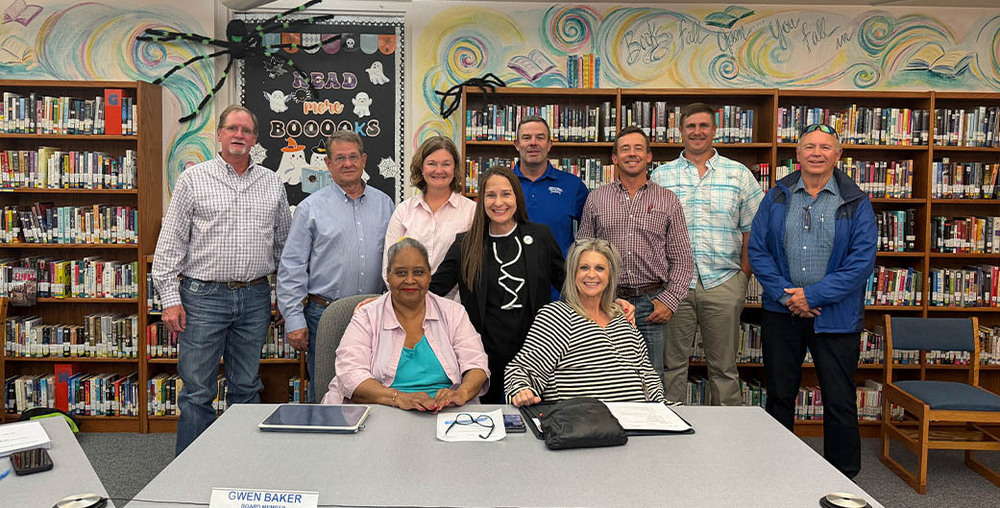
WTC President Dr. Laurie Sharp (center, in black) with the Stamford ISD Board of Trustees.
Strong educational partnerships begin with a simple question: What do students and their communities need to succeed?
That question guided Western Texas College President Dr. Laurie Sharp's remarks to the Stamford Independent School District Board of Trustees as she continued her efforts to strengthen relationships with public schools throughout the College’s service area.
Rather than arriving with a list of programs or proposals, Sharp brought a message centered on listening, learning and understanding what matters most to Stamford ISD.
"I believe there is tremendous value in showing up, building relationships, and learning directly from the people who know their schools and communities best," Sharp told board members.
The visit reflects Sharp's commitment to meeting with local school boards and building stronger connections between Western Texas College (WTC) and the communities it serves.
Drawing on her experience as a former classroom teacher, Sharp recognized the important role educators play in helping students discover their potential. She emphasized that meaningful opportunities often begin with everyday interactions between students and the people who believe in them.
"Sometimes it is a conversation, a word of encouragement, or simply someone recognizing potential that a student has not yet recognized in themselves," Sharp said.
For WTC, that same personal approach extends to its relationships with area school districts.
Sharp expressed interest in learning more about Stamford ISD's goals and exploring how the College could help students prepare for life after high school. Potential areas of collaboration include dual-credit courses, academic pathways, career and technical education, and workforce training.
Dual credit, which allows students to earn college credit while attending high school, offers one possible starting point. These opportunities can help students gain confidence, reduce college costs and begin working toward a degree or certificate before graduating.
However, Sharp stressed that successful partnerships must reflect each district's individual needs rather than follow a single approach.
"What works well in one community may not be the right approach for another," Sharp said. "Meaningful partnerships are not built by arriving with a predetermined solution. They begin with conversations, shared priorities, and a willingness to find the right opportunities for the students we serve."
Sharp also spoke about the importance of creating opportunities for young people in rural West Texas. Whether students plan to continue their education, enter the workforce or eventually return home to build their careers, she believes they deserve access to educational pathways that support their ambitions.
That commitment extends beyond helping students enroll in college. It means understanding the communities they come from, recognizing their strengths and working with local educators to help students make informed decisions about their futures.
As WTC moves forward under Sharp's leadership, building relationships with local schools remains an important part of the College's role in the region.
"As President, I want WTC to be known not simply as a college that serves this region, but as a college that genuinely knows its communities, values its relationships, and follows through on its commitments," Sharp said.
She closed her remarks by reinforcing the philosophy guiding her presidency: People first. Purpose always. Forward together.
For Stamford ISD and Western Texas College, the visit represents an opportunity to begin conversations that could lead to stronger educational connections and new possibilities for students and families.